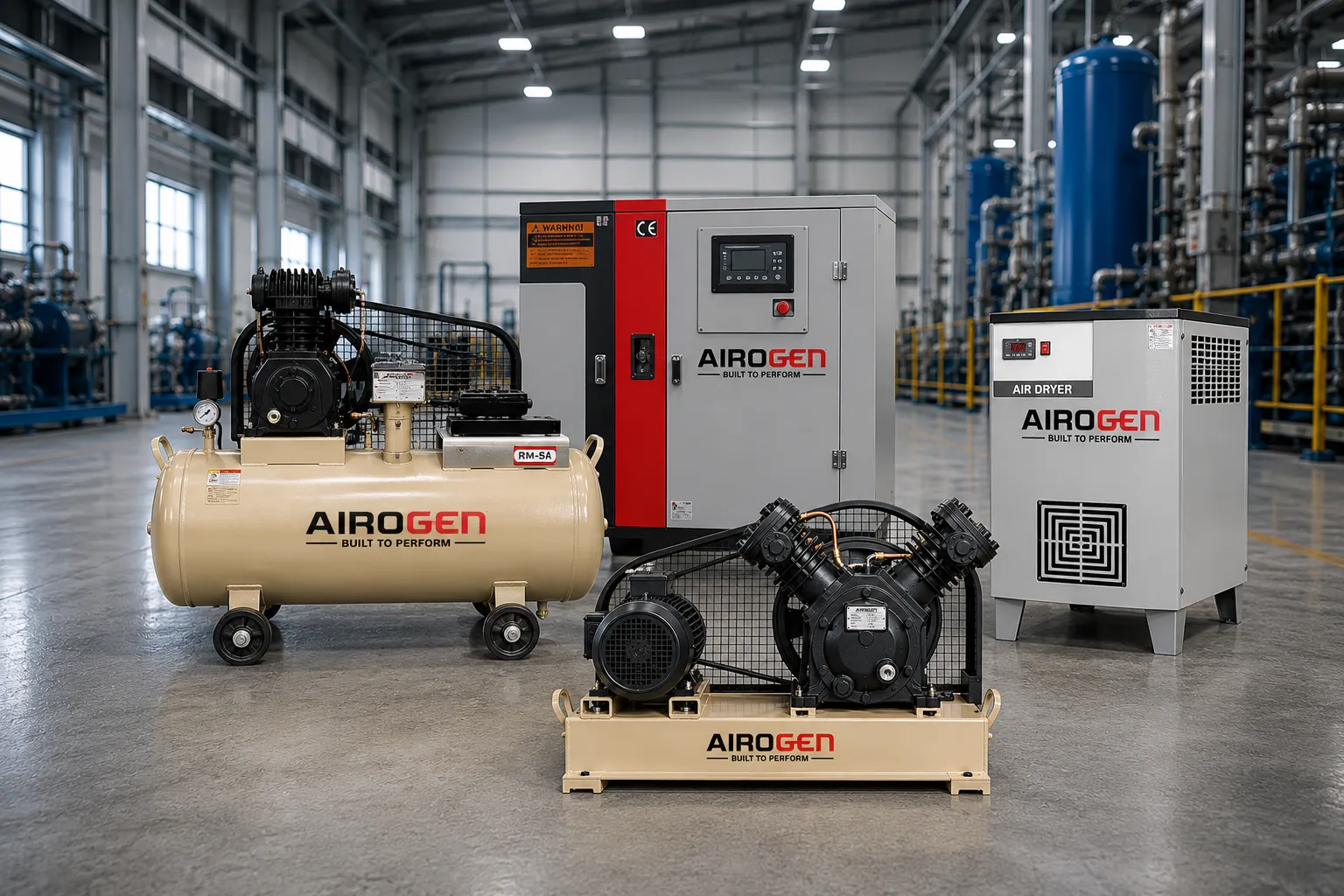
Industrial air compressors are the backbone of pneumatic tools, packaging lines, and process air in factories across Ahmedabad and beyond. Choosing the right type—single stage, two stage, or screw—starts with understanding pressure, flow (CFM or L/min), and duty cycle.
Below are practical points AiroGen engineers share with customers when they first evaluate compressed air for a workshop or production line.
Pressure and flow together
A compressor must deliver enough volume at the pressure your tools or machines need. Undersizing causes pressure drop and overheating; oversizing wastes energy. Always match catalog curves to your peak and average demand.
Single stage vs two stage
Single stage units are compact and economical for intermittent duty up to moderate pressure. Two stage designs run cooler at higher pressures and suit heavier continuous loads—common in metalworking and larger plants.
Moisture and filtration
Compressed air carries water vapour. Drains, filters, and where needed refrigerated dryers protect tools and product quality. Skipping this step is one of the main causes of premature valve and cylinder wear.
Installation and ventilation
Good intake air, clearance around the pump, and solid electrical supply extend motor and belt life. AiroGen’s team can guide layout so heat and noise are managed safely on your shop floor.
Planned maintenance
Oil level checks, belt tension, air filter cleaning, and periodic valve inspection keep downtime predictable. A simple logbook tied to running hours pays for itself in avoided emergency repairs.
When to talk to the manufacturer
If your load is growing, pressure is unstable, or energy bills are rising, a site review can identify leaks, wrong setpoints, or equipment that is due for upgrade—before production suffers.
Why local support matters
Having a partner in Ahmedabad who understands Gujarat’s industrial mix means faster spares, clearer communication, and systems tuned for your actual operating environment—not only catalogue defaults.